.jpg%3F2026-07-01T14%253A55%253A25.698Z&w=3840&q=100)
When your child shows interest in a passion that shaped your life, it’s easy to project your dreams onto them. I’m navigating this challenge, learning to avoid the traps that could turn their joy into pressure..
I am exactly the kind of parent who could ruin cycling for my kids.
My entire life has been spent around bikes, and much of it was spent racing at the highest levels. I know too much. I care too much. I cast a shadow that could make it difficult for my children to carve their own identities in the sport, separate from mine. I know that part of the challenge too well. I was in my twenties before I became my own person, not just my parents’ kid.
My kids are four and six, and right now, they love riding bikes. I love that, of course. What parent wouldn’t love sharing the thing they love most with their children?
But my son is old enough now to understand pieces of what I used to do. Most of it is still abstract to him, but I can feel my own baggage arrive when he starts asking about U13 races on the “big course.”

Right now, bikes are still pure for him. Strapping on a number plate and riding between the tape is not a pipeline to a life chasing my dreams. The words he is starting to grab onto — Olympics, professional bike racer — have no real connection to what he is doing when we go to a race. He gets to line up with the big kids, ride the grown-up course, hear people cheer, and feel like he has been let into a larger version of something he already loves.
He is not thinking about results, identity, pressure, burnout, or where the sport can lead if it grabs hold of you hard enough.
I am.
I am the problem. Not him.
Any parent who carries a deep history with an activity can bring too much to the moment their child reaches for it.
His favorite rides are still simple: showing me the trails he rides at summer camp, our after-school loop to get ice cream, family rail-trail rides with a stop for chicken wings. I can picture a future where I travel to watch him race. I can also picture a future where nothing ever matters more than those rides.
Both thoughts can be true. Both can be dangerous if I confuse them for his experience.
Cycling gave me more than I can ever separate from who I am. It also took enough that I cannot pretend to watch my kids discover it from neutral ground. I want to help. I want to protect them. I want them to love the best parts and somehow avoid the rest.
This is not a guide from someone who has it figured out. My kids are still young. I am learning this in real time, and I am sure I will make mistakes. But I can already see the traps because I am built to fall into them: caring too much, knowing too much, and letting my own history drive their experience.

So this is the question I keep coming back to: how do you share something that shaped your life without making your child carry the weight of it?
The Traps I’m Trying to Avoid
The first trap is escalating too quickly.
When your child shows interest in something you know well, your mind can move faster than theirs. One good day turns into better gear, more planned rides, more events, and a development pathway. But a brief moment of interest is just that: a moment. Sometimes it only means they had fun today.
That is enough.
The second trap is letting expertise take over.
My knowledge is useful when it makes the experience easier: finding the right bike, the right places to ride, the right way to set the day up for success. It becomes a problem when it makes the experience mine.
That manifests itself in subtle ways: pushing to ride a little longer, trying to skip the snack break because we are two minutes from home, forgetting that they do not care about the extra mile, or that our garage is 90 seconds away. The adventure is riding together, stopping when something catches their attention, or stuffing pockets with treats to eat in the woods.
The third trap is coaching every mistake I see.
If you know an activity well, you see everything. It is impossible not to. But constant correction can turn every outing into a test, and your child’s mistakes can start to feel like a reflection of you.
I am trying to catch myself before that happens.
Sometimes I ask, “Can I tell you a secret?” or “Can I show you something?” If the answer is no, I have to let it go.

I’m also learning that they absorb plenty by watching. Sometimes “Can I lead for a little?” is the best teaching tool. They learn without knowing they are being taught.
The fourth trap is confusing my feelings with theirs.
When my son races, I feel pride and fear at the same time. Most of that originates in my emotional baggage. To him, a race is still a grand adventure. He is not trying to settle accounts with the sport. He is not carrying my history. He is just a boy riding his bike.
Nothing more. Nothing less.
When I remember that, everything feels safer.
The final trap is thinking success means doing it the way I did.
My kids may love bikes differently than I do. They may care more about the social part, the freedom, the snacks, or the fact that we are doing it together. They may leave bikes and come back. They may find something else that eclipses bikes completely.
That has to be okay.
The goal is not for them to inherit my relationship with cycling, though I’m still terrified they will. The goal is to give them a fair chance to build one on their own terms.

Learning to See It Their Way
This is the part I didn’t know I needed.
Some days I do it better than others, but when I can keep my old instincts in check, my kids show me a version of cycling I either never knew or lost sight of a long time ago.
It's riding unencumbered by training schedules, fitness, or progression. It's after-school ice cream loops with my son and Monday evening trail rides with my daughter. It's rail-trail miles with chicken wings halfway through, stopping to look for turtles in the canal, and loading the family into the car for an all-day bike adventure that covers single-digit miles.
It's my son showing me the trails he rides at summer camp like he is letting me into his world, not stepping into mine.
Their version of cycling moves at a different cadence, and it does not need to lead anywhere. Each ride is its own moment, its own journey, and its own destination.
If they love bikes, I want bikes to be theirs. If they leave them, I want them to leave without guilt. If they come back, I want them to come back with nothing to prove.
And if I get this right, maybe cycling can become something different for me, too. Not the thing I chased, not the thing I lost, and not the thing I need them to validate. Just something we get to share, for as long as they want to share it.
The Kitli Promise
We earn commissions through affiliate links. That’s how we fund our testing and keep Kitli free. But commissions never influence what we recommend.
“If we wouldn't use it with our own families, we don't recommend it to yours.”
Read Our Story →Bobby Lea
Co–Founder
Bobby Lea is a dad of two and co-founder of Kitli. Before launching Kitli, he was a senior reviews editor at Bicycling, where he spent years testing gear and helping readers decide what was worth their money. He also raced bikes professionally for more than a decade and competed in three Olympic Games. He lives with his wife and kids on a farm in rural Pennsylvania, where his children are very good at finding the limits of whatever gear they use.
View Profile →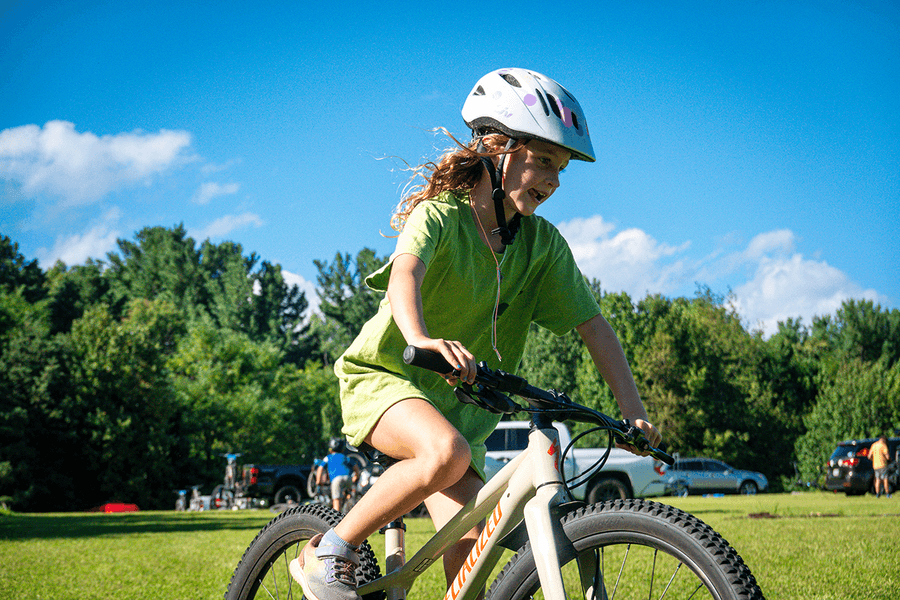
~2-900x983.jpg&w=3840&q=75)