After years of testing bikes as an Olympic cyclist, gear editor, and dad, I’ve learned that the best kids bike is the one that fits properly, feels manageable, and matches how a child actually rides. These are the bikes I’d choose for my own kids at every size and stage.
The Best Kids Bikes by Size
- Best Balance Bike: Early Rider Bigfoot 12
- Best 14-Inch: Prevelo Zulu One
- Best 16-Inch: Prevelo Alpha Two
- Best 20-Inch: Trek Wahoo 20 Trail
- Best 24-Inch: Early Rider Charger 24
- Best 26-Inch: Woom OFF 6
Keep scrolling for our full reviews of each model, plus my expert advice on finding the right fit, weight, and style for your rider.
What’s the best bike for my kid?
The best kids bike is not the one with the most features. It is the one your child can control, wants to ride, and can use where they actually ride.
After years of racing, testing bikes, and buying them for my own kids, I come back to the same three things: fit, weight, and riding style. A neighborhood rider, a pump-track kid, and a young mountain biker may all need different bikes, even if they are the same age.
With that in mind, these are the kids bikes I trust most.
If you don’t see the exact size or model you need, check the brand's website. Most offer multiple sizes in each style.
Looking for a specific size or style of bike? Explore our full collection of expert-vetted bikes, gear reviews and category-specific buying guides in All Kids Bikes & Gear.
The Best Kids Bikes for Every Age & Stage
Balance Bikes
Age: 18 months–4 years
Prioritize: rubber tires
Upgrade for: rear handbrake

Banana Bike
Balance BikeWhat We Love
- • Low-cost entry point for first-time riders
- • Low standover height helps small kids get started
- • Light for the price
- • Simple design with very little to maintain
- • Flat-proof EVA foam tires
Worth Knowing
- • Foam tires do not grip as well as pneumatic rubber tires
- • Not ideal for gravel or rough ground
- • Upgrade to the GT version with pneumatic tires for an extra $22
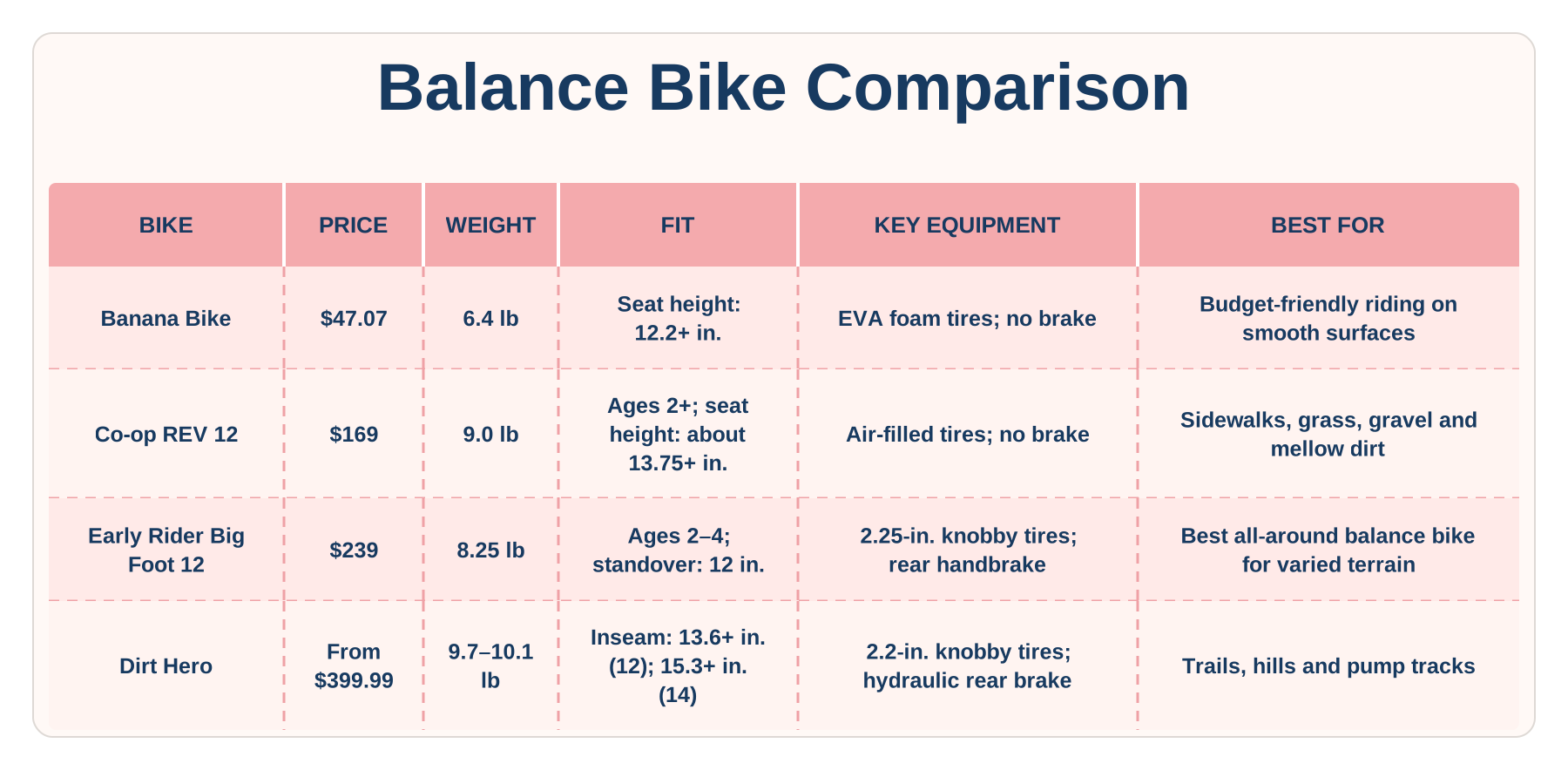
The Banana Bike is a low-cost way to see if your toddler is interested in riding before spending premium balance-bike money. It has a low standover height, simple frame, and very light weight for the category, which helps younger riders get both feet down and manage the bike. The limitation is the EVA foam tires. They are flat-proof, but they do not grip or roll as well as pneumatic rubber tires, especially on slick floors or uneven ground. It works best on driveways, garages, and smooth sidewalks.

Co-op Cycles
REV 12 Kids' Balance BikeWhat We Love
- • Pneumatic tires give better grip and cushion than foam tires
- • Rolls better over cracks, gravel, grass, and dirt
- • More capable than most budget EVA foam-tire bikes
- • Strong value for a balance bike with real rubber tires
Worth Knowing
- • Heavier than many balance bikes in this category
- • No handbrake
- • Can fit large, so check inseam before buying
- • Air-filled tires need occasional pressure checks
The Co-op Cycles REV 12 is a higher-value balance bike for kids who will ride beyond perfectly smooth pavement. The pneumatic tires give better grip and cushion than EVA foam tires, which helps on driveways, sidewalks, grass, gravel paths, and dirt. It is heavier than some balance bikes, and it can fit a little large, so check inseam before buying and make sure your child can get both feet flat on the ground. It does not have a handbrake, which is fine for most low-speed beginners but limiting for aggressive riders.

Early Rider
Big Foot 12What We Love
- • Wide, knobby tires handle rough terrain well
- • Low-pressure setup improves stability and control
- • Handbrake introduces braking skills early
- • Schrader valves are easy to inflate anywhere
Worth Knowing
- • Brake is designed for learning, not strong stopping power
- • Higher price than most balance bikes
The Early Rider Big Foot 12 is for kids who are ready to take a balance bike beyond smooth sidewalks. The wide, knobby pneumatic tires can run at lower pressure, adding grip and stability on gravel, grass, dirt, and mellow singletrack. It also has a small handbrake, which is useful for teaching the motion of braking, but it is more of a learning tool than a high-speed stopping system. Schrader valves make inflation easier with standard pumps.

Kids Ride Shotgun
Dirt Hero Off Road Balance BikeWhat We Love
- • Trail-focused geometry adds stability at speed
- • Big tires give grip and cushion on rough terrain
- • Available in 12- and 14-inch wheel sizes
- • Hydraulic rear disc brake adds real stopping power
- • Low standover height helps smaller riders manage the bike
Worth Knowing
- • Heavy for a balance bike
- • Expensive compared with most balance bikes
- • More bike than most beginners need
- • Best for off-road riding
- • Not the right choice for casual driveway or sidewalk use
- • Check inseam carefully before choosing 12-inch or 14-inch wheels
The Kids Ride Shotgun Dirt Hero is for confident balance-bike riders who are already charging down hills, pump tracks, or rougher terrain. It comes in 12- and 14-inch sizes, with big 2.25-inch pneumatic tires, trail-focused geometry, and a hydraulic rear disc brake that adds real stopping power. The long wheelbase, low standover height, and slack head angle help it feel planted at speed. It is heavy and expensive for a balance bike, so skip it for flat driveway scooting. For aggressive little riders, it offers a level of control most balance bikes cannot.
For a deeper dive into our favorite balance bikes, check out my article “Best Balance Bikes 2026: Pro-Tested Picks for Toddlers.”
14-Inch Bikes
Age: 3–5 years
Prioritize: low gear ratio
Upgrade for: balance-bike conversion

Woom
Go 2What We Love
- • Low gearing
- • Stable geometry helps new riders feel more in control
- • Steering limiter helps prevent over-rotating the handlebars
- • Color-coded rear brake lever makes coaching easier
- • Woom trade-in program helps offset the next size up
Worth Knowing
- • Premium price for a first pedal bike
- • Ships with a coaster brake and hand brakes
- • Freewheel kit is sold separately and worth considering ($26)
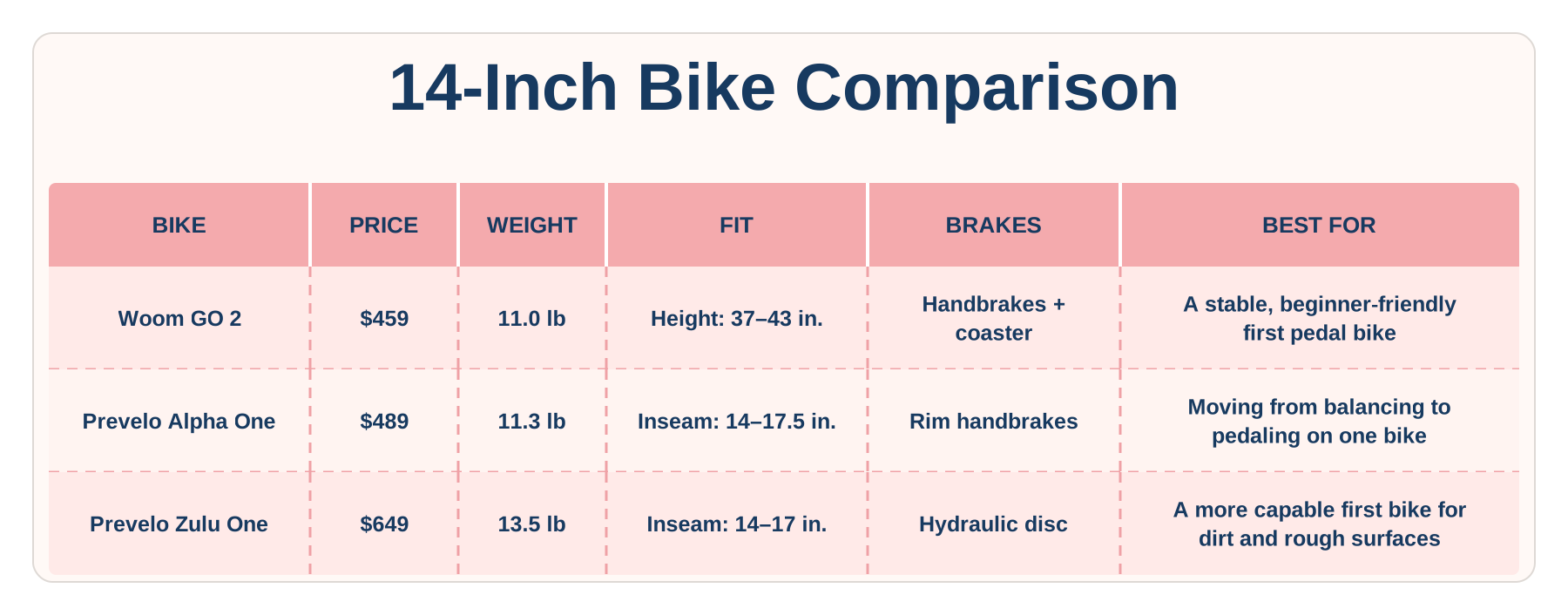
The Woom GO 2 is for kids moving from a balance bike to their first pedal bike. It is light, stable, and geared low enough to help small riders get moving from a stop and keep momentum on slight hills. The steering limiter helps prevent oversteering, the green rear brake lever makes coaching easier, and the enclosed drivetrain keeps grease off legs. In the U.S., it ships with a coaster brake, but Woom sells a $26 freewheel kit. I’d add it so kids can learn to use handbrakes without the confusion of a second way to stop.

Prevelo
Alpha OneWhat We Love
- • Balance-Tec design converts from balance bike to pedal bike
- • Very light for the category
- • Low gearing helps little riders start and climb
- • Stable, upright fit for early pedal-bike confidence
Worth Knowing
- • More expensive than basic 14-inch kids bikes
- • Balance-bike conversion requires removing the cranks and chain
- • Rim brakes are appropriate for this size, but not built for aggressive riding
The Prevelo Alpha One is for kids who are too tall for most 12-inch balance bikes but not ready to pedal confidently. Its Balance-Tec design lets it work as a true 14-inch balance bike, then convert to a pedal bike by removing the cranks and chain. That is different from simply taking pedals off a normal bike, which leaves the crank arms in the way. It is light, geared low for small legs, and has a low standover height so kids can get both feet down.

Prevelo
Zulu OneWhat We Love
- • Lightweight relative to most kids’ bikes
- • Stable, confidence-building geometry
- • Converts between balance and pedal bike
- • Hydraulic disc brakes
Worth Knowing
- • Expensive for a 14-inch bike
- • Still heavy relative to a small child’s body weight
- • Best value if passed down or resold
The Prevelo Zulu One is for young riders who need a more capable first bike than the usual heavy, twitchy kids’ bike. It is light for its size, geared low for small legs, and built with a longer wheelbase and slacker front end that make it feel more stable on rough or uneven terrain. Like the Alpha One, the balance-bike conversion kit is the standout feature: you can remove the drivetrain with Allen wrenches, run it as a true balance bike, then add pedals back when your child is ready. It is expensive, but one of the best in its class.
16-Inch Bikes
Age: 4–6 years
Prioritize: handbrakes
Upgrade for: hydraulic disc brakes

Co-op Cycles
REV 16 Kids' BikeWhat We Love
- • Durable aluminum frame
- • Includes removable training wheels
- • REI in-store assembly is available
- • One year of free adjustments through REI
Worth Knowing
- • Heavy for a 16-inch kids’ bike
- • Coaster brake may complicate learning for some kids
- • Better for neighborhood riding than trails or aggressive use
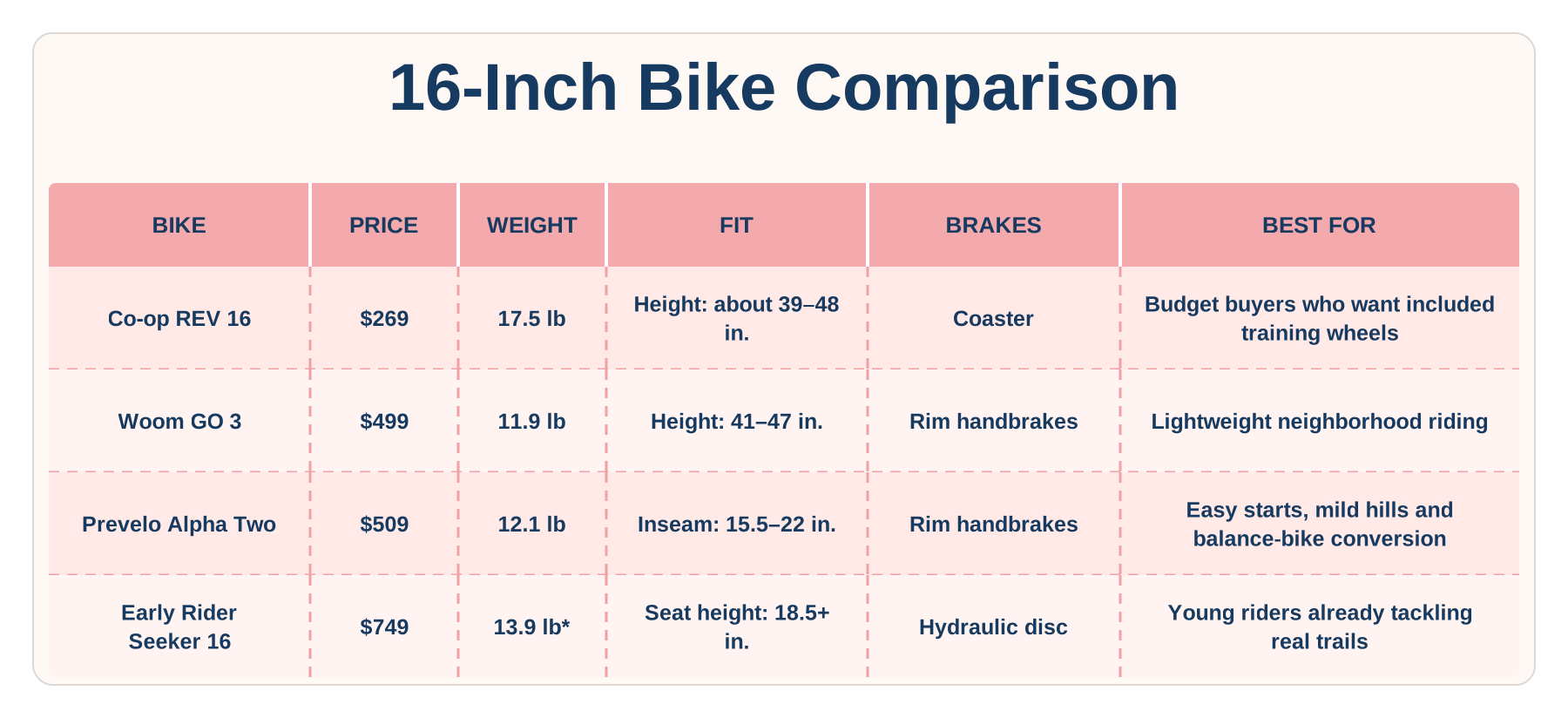
The Co-op Cycles REV 16 is for families who want a durable first pedal bike without premium-bike pricing. It has an aluminum frame, low standover height, training wheels, a chain guard, a bell, and REI support, including free in-store assembly and a year of adjustments. At about 17.5 pounds, it is heavy for a 16-inch bike, but lighter premium models can cost two to three times more. The coaster brake works for casual first rides, though kids will eventually need to learn hand brakes.

Woom
Go 3What We Love
- • Incredibly lightweight
- • Exceptional build quality and resale value
- • Eligible for Woom's trade-in program
- • Upright riding position is good for riders learning to find their balance
Worth Knowing
- • Premium price
- • No kickstand included
- • Not ideal for off-road riding beyond smooth trails and cinder paths
The Woom GO 3 is for kids learning to ride their first pedal bike or moving up from a balance bike. It is light, stable, and geared low enough to help kids start, climb small hills, and stay balanced at low speeds without fighting the bike. The upright fit, short reach, and kid-specific parts make it approachable for new riders. It uses rim brakes to keep weight and cost down, which is fine for neighborhood riding and early confidence. If your kid is already riding pump tracks or real trails, look at something more aggressive like the Early Rider Seeker 16.
.png%3F2026-04-22T16%253A29%253A45.165Z&w=3840&q=100)
Prevelo
Alpha TwoWhat We Love
- • Extremely low gearing that makes starts and climbs easier
- • One of the lightest bikes in the 16" category
- • Balance-Tec system allows true balance bike conversion
- • Versatile tires for pavement and light dirt use
- • Stable, upright fit that works well for most kids
Worth Knowing
- • Very similar in fit and ride to the Woom 3
- • Balance bike conversion requires removing parts
- • Not built for aggressive riding or rough trails
- • Rim brakes are appropriate for this stage, but not for higher-speed riding
The Prevelo Alpha Two is a premium 16-inch bike that rides very similarly to the Woom 3, with closely matched weight, gearing, fit, and handling. The difference is Prevelo’s Balance-Tec design: you can remove the cranks and chain to run it as a true balance bike, then convert it back to pedals when your child is ready. It's one of a very few number of 16-inch bikes with that feature. It is light, geared low for easy starts, and has an upright, stable fit. Choose it over the Woom if balance-bike conversion is useful.

Early Rider
Seeker 16What We Love
- • Trail-focused geometry adds stability on rough terrain
- • Hydraulic disc brakes give small hands more control
- • 2.25-inch Kenda Booster tires
- • Light for a 16-inch trail bike with hydraulic discs
- • Easy to customize with standard bike parts
Worth Knowing
- • Expensive for a 16-inch bike
- • More bike than most new riders need
- • No suspension fork, which is usually the right call at this size
- • Best for kids already riding trails or pushing hard
The Early Rider Seeker 16 is for kids who already ride trails and need more than a basic 16-inch bike with knobby tires. It has trail-focused geometry, hydraulic disc brakes, 2.25-inch Kenda Booster tires, and adult-bike-level serviceability. The long wheelbase, low standover, and slack front end help it feel stable on rough ground, while the low weight keeps it manageable. It's more bike than many kids need, but for kids charging through roots, rocks, and real trails, it is one of the best 16-inch bikes available.
Learn more about the best kids hybrid bikes and see our top picks in my article “Best Kids Hybrid Bikes 2026: Lightweight Bikes for Neighborhoods and Paths”
20-Inch Bikes
Age: 5–8 years
Prioritize: low weight
Upgrade for: wider range of gears, suspension fork

Cannondale
Quick 20What We Love
- • Lightweight for a 20-inch bike
- • 7-speed drivetrain if good for neighborhood riding and smooth paths
- • Fast-rolling tires with enough tread for cinder paths and smooth dirt
- • Low standover height helps with confidence
- • REI assembly and service support if bought through REI
Worth Knowing
- • Not built for regular trail riding
- • Cable-actuated brakes need regular maintenance
- • Less gear range than pricier 9- or 10-speed bikes
- • Best for pavement, rail trails, and smooth paths
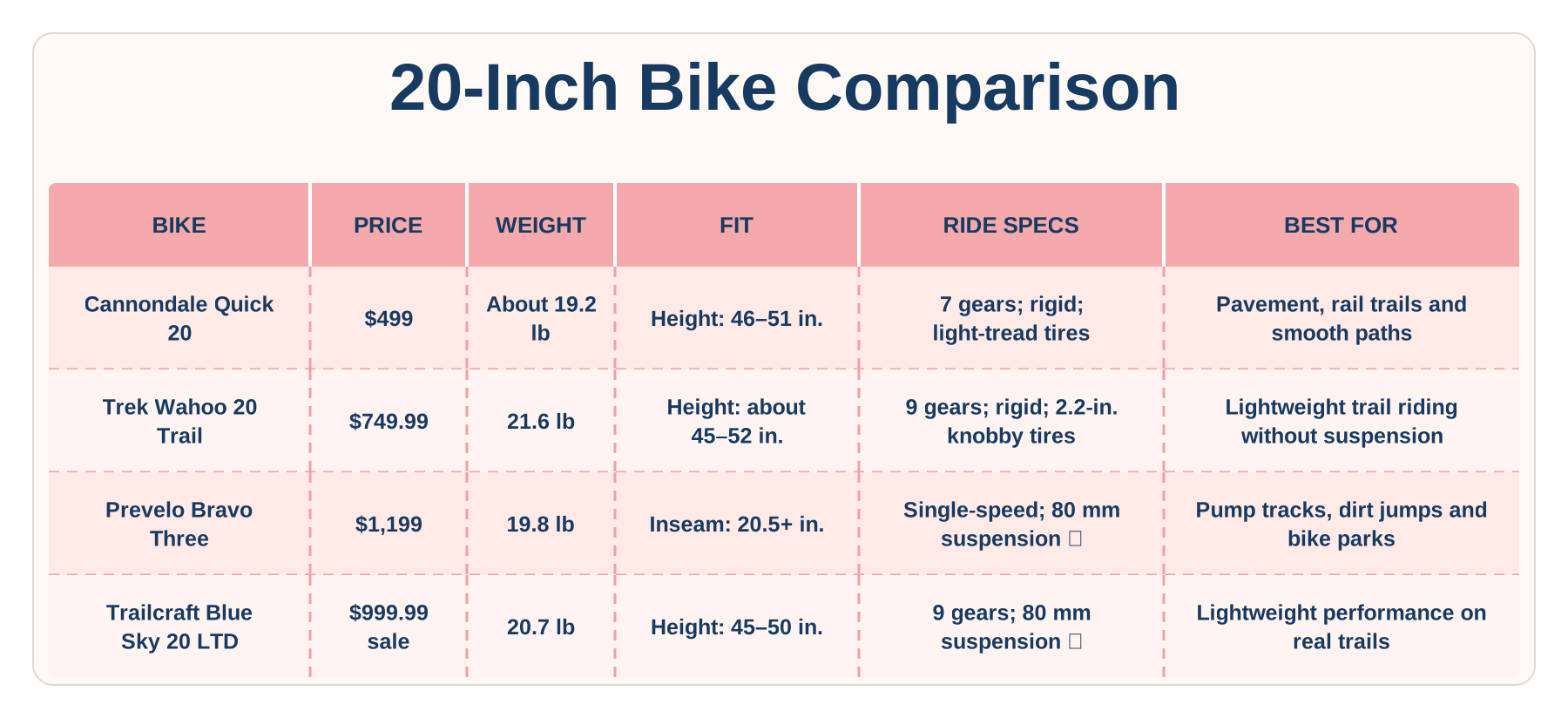
The Cannondale Quick 20 is for kids riding pavement, rail trails, and smooth paths. It is light for a 20-inch bike, with an aluminum frame under 20 pounds and a 7-speed drivetrain that gives enough range for most neighborhood and path riding. The tires roll well on pavement but have enough volume and tread for cinder paths and smooth dirt. This is not a small mountain bike. If your child regularly rides rougher trails, look for wider tires, off-road geometry, and stronger brakes.

Trek
Wahoo 20 TrailWhat We Love
- • Stable, confidence-inspiring geometry
- • Lightweight for a trail-capable bike
- • Carbon fork keeps weight down
- • Built for real singletrack, not just paths
- • Also available with 24-inch wheels
Worth Knowing
- • No suspension; relies on tires and technique for comfort
- • More bike than needed for casual riding
- • Higher cost than basic 20-inch bikes
- • Frequently out of stock online, and most readily available at Trek dealers
The Trek Wahoo 20 Trail is for kids ready to move beyond rail trails and cinder paths into real singletrack. It has trail-focused geometry, a low center of gravity, and a long wheelbase that help it feel more stable on rough or twisty terrain. The carbon fork keeps weight low without adding a cheap suspension fork that may not work well for lighter riders. It is not for casual neighborhood riding. It is for kids who want a real trail bike feel in a lighter 20-inch package.

Prevelo
Bravo ThreeWhat We Love
- • Purpose-built for pump tracks, dirt jumps, and bike parks
- • Rear hydraulic disc brake gives strong, simple stopping controlple
- • 2.2-inch tires add the right blend of grip and speed
- • Kid-specific cockpit with 19mm grips fits smaller hands
Worth Knowing
- • Expensive for a 20-inch kids’ bike
- • Too specific for most casual riders
- • Not the right choice for everyday cruising or longer trail rides
- • Rear brake only, though mounts allow a front brake to be added
- • Best for kids with regular access to pump tracks, bike parks, or jump lines
The Prevelo Bravo Three is for kids who spend real time at pump tracks, bike parks, and jump lines. It is not a general-purpose 20-inch bike. The short chainstays, high bottom bracket, low saddle, and aggressive front end make it easy to move around on rollers, berms, and jumps. The Manitou JUNIT Expert air fork can be tuned for lighter riders, and the rear hydraulic disc brake gives enough stopping power for this style of riding. It is expensive and specific, but built for big jumps and hard landings.

Trailcraft
2026 Blue Sky 20 LTDWhat We Love
- • Very light for a 20-inch mountain bike with suspension
- • Low standover helps smaller riders fit the bike sooner
- • Hydraulic disc brakes with short-reach levers
- • 1x9 drivetrain
- • Comes with a water bottle setup that fits the frame
Worth Knowing
- • Expensive for a 20-inch kids’ bike
- • More bike than most casual riders need
- • 80mm fork gives less travel than the Early Rider Charger 20
- • Early Rider may offer a longer fit runway for growing kids
- • Best for kids already riding real trails
The Trailcraft Blue Sky 20 LTD is a premium 20-inch mountain bike for kids already riding real trails. It sits with bikes like the Prevelo Zulu Three and Early Rider Charger 20, but the lower standover height makes it especially useful for smaller riders moving up from a 16-inch bike. The build includes an 80mm TC30 air fork, hydraulic disc brakes, 1x9 drivetrain, Maxxis Pace tires, and a weight just over 20 pounds. It is expensive and specific, but built for young riders ready for real trail progression.
24-Inch Bikes
Age: 7–11 years
Prioritize: intended use
Upgrade for: higher quality drivetrain, suspension

Specialized
Riprock 24What We Love
- • Versatile 2.1-inch Kicker tires are good for trails, paths, and pavement
- • Microshift Advent 1x9 drivetrain
- • Capable trail bike without suspension-bike pricing
- • Lower weight than many cheaper suspension-fork alternatives
Worth Knowing
- • No suspension fork
- • Wider tires will feel slower on pavement than hybrid tires
- • Best for kids riding real trails, not mostly neighborhood loops
- • Lighter suspension bikes exist, but they cost significantly more
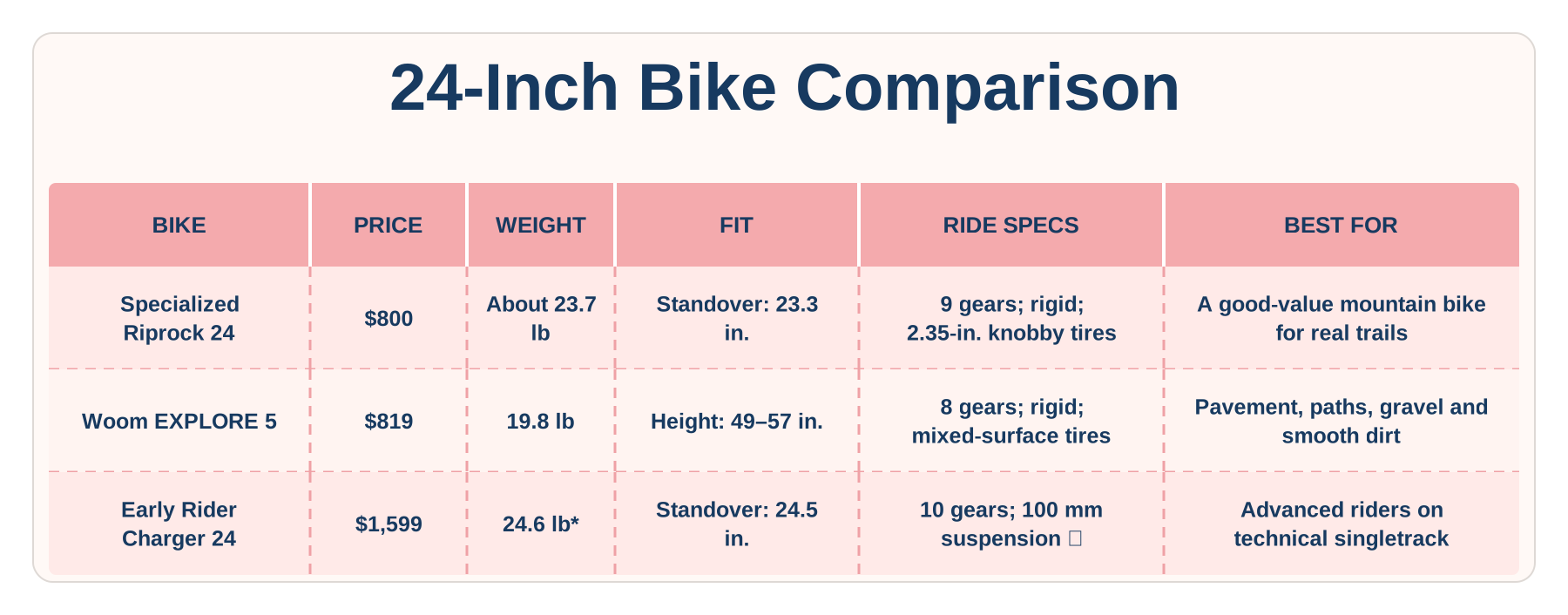
The Specialized Riprock 24 is for families who want a real 24-inch trail bike without paying the premium that comes with a suspension fork. It has the right parts for dirt: 2.1-inch Kicker tires, hydraulic disc brakes, a 1x9 drivetrain, and modern mountain bike geometry. The rigid fork keeps price and weight down, while the wide tires add grip and cushion on roots, rocks, and loose corners. A tubeless tire conversion can improve comfort and reduce pinch flats. It is a strong value for kids riding real trails.

Woom
Explore 5What We Love
- • Light for a 24-inch all-terrain bike
- • 1x8-speed drivetrain
- • Hydraulic disc brakes
- • 2-inch tires work well on pavement, cinder paths, and packed dirt
- • Woom trade-in program helps offset future size-ups
Worth Knowing
- • Expensive for a general-purpose 24-inch bike
- • Not built for regular technical trail riding
- • Sticker packs are sold separately
- • Fenders and lights are sold separately
The Woom Explore 5 is a premium 24-inch all-terrain bike for kids who ride pavement, rail trails, neighborhood loops, and smooth dirt. It is lighter and faster than a true mountain bike, but more capable than a pavement-only hybrid. At just under 21 pounds, it is light for the size, with a 1x8 drivetrain, hydraulic disc brakes, and 2-inch Schwalbe Billy Bonkers tires. The adjustable stem helps fine-tune fit as kids grow. It is expensive, but Woom’s trade-in program and resale value help offset the price.

Early Rider
Charger 24What We Love
- • Real trail geometry that handles speed and rough terrain
- • 100 mm air fork adds meaningful control
- • Higher-quality, more durable components
- • Capable on technical singletrack
Worth Knowing
- • More expensive than most 24-inch bikes
- • About 3 lb. heavier than premium rigid kids bikes
- • Overbuilt for beginners or casual riders
The Early Rider Charger 24 is for kids already riding real singletrack at speed and starting to outgrow simpler 24-inch bikes. It has a 100mm air fork, Shimano Deore 1x10 drivetrain, and trail-focused geometry that give it more control when terrain gets rough. It is about three pounds heavier than rigid bikes like the Specialized Riprock 24, but that weight comes from real suspension and higher-quality components. It is expensive and unnecessary for beginners, but highly capable for advanced young trail riders.
Looking for a deeper dive into this size? Check out my dedicated guide – “Best 24-Inch Kids Bikes 2026: Tested and Reviewed” – where I break down the top picks.
26-Inch Bikes
Age: 10+ years
Prioritize: durable components
Upgrade for: adult-quality components

Trek
Wahoo 26 PathWhat We Love
- • Lightweight hybrid bike
- • 1x8-speed drivetrain
- • 26x2.0-inch tires work well on pavement, gravel paths, and light dirt
- • Rim brakes are simple and easy to service
- • Integrated rear light mount on the saddle
Worth Knowing
- • Not built for regular singletrack or rough trails
- • Rim brakes need occasional adjustment
- • Integrated seatpost limits saddle-position adjustment
- • No kickstand or bottle cage included
- • Wahoo Trail is the better choice for off-road riding
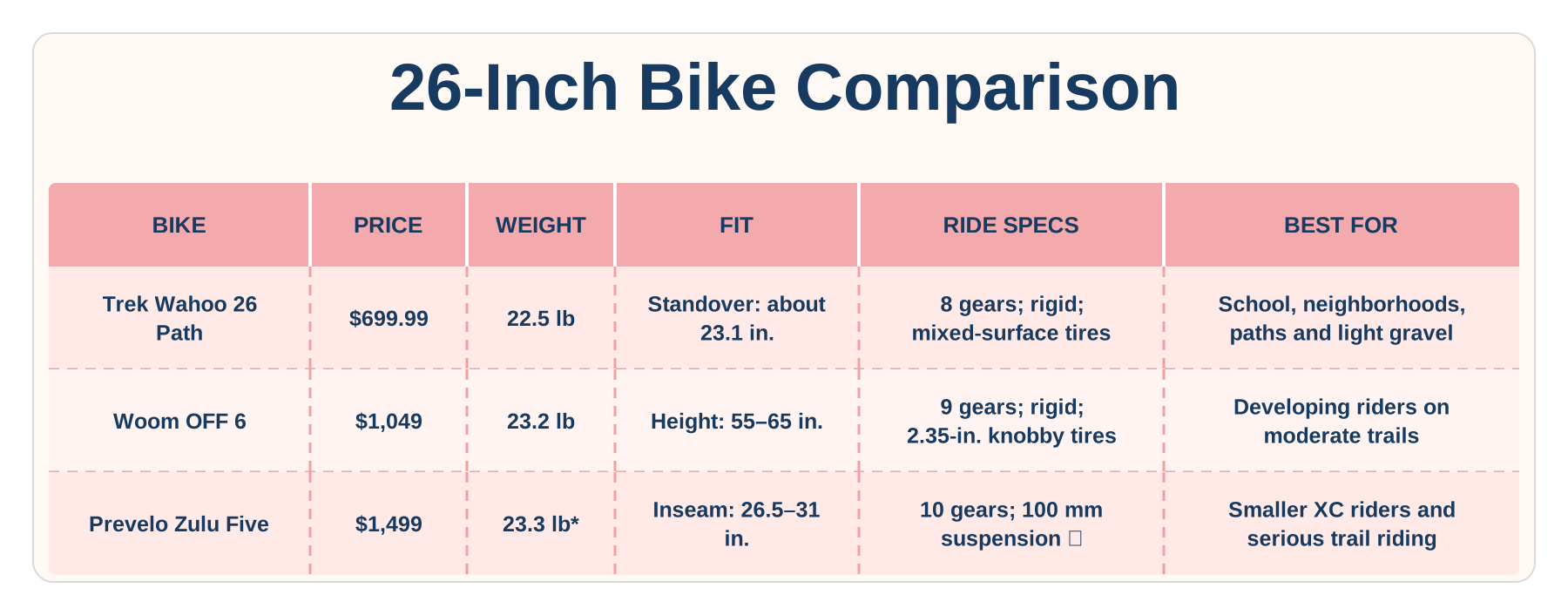
The Trek Wahoo 26 Path is for older kids who need a light, simple bike for school, neighborhood rides, bike paths, parks, and gravel paths. It skips suspension, disc brakes, and trail parts that add cost and weight when the riding is mostly smooth. At about 22.5 pounds, it is lighter than many entry-level kids’ mountain bikes. The 1x8 drivetrain keeps shifting simple, and the rim brakes are easy to operate and service.

Woom
OFF 6What We Love
- • Light for a 26-inch bike
- • Carbon fork keeps weight low
- • Wide tires add comfort and traction
- • Dropper post compatible for progression
- • Well-suited for developing riders
Worth Knowing
- • Rigid fork limits performance on rough trails
- • Expensive compared to entry-level options
- • Best suited for moderate trail riding
The Woom OFF 6 is for kids moving into 26-inch bikes who need a light, capable mountain bike without the weight of a suspension fork. The carbon fork keeps the bike light and precise, while the wide 2.35-inch tires add grip and cushion on trails. It is capable enough for real dirt without feeling overly aggressive, which makes it a strong fit for progressing riders who are not yet riding at a high level. It is also dropper-post compatible, giving it room to grow with their skills.

Prevelo
Zulu FiveWhat We Love
- • Good suspension, drivetrain, and brakes
- • Stable handling on real trails
- • XC performance in a small package
Worth Knowing
- • More expensive than typical kids’ bikes
- • Heavier than rigid options
The Prevelo Zulu Five is for younger cross-country riders who are not quite ready for a 29er but need a real race-capable mountain bike. It has an air-sprung suspension fork, tubeless-ready Kenda Booster Pro tires, and geometry scaled for smaller riders, giving kids more control than they’d get from an oversized adult bike. The main value is fit: it lets developing riders keep progressing on serious trails without forcing them onto a bike that is too big. It is built for kids who are already riding hard.
29-Inch Bikes
Age: 14+ years
Prioritize: fit, weight, and drivetrain
Upgrade for: dropper post, carbon frame

Trek
Marlin 7 Gen 3What We Love
- • Shimano MT200 brakes are reliable
- • SRAM NX Eagle drivetrain offers wide range and solid durability
- • Stable geometry for skill progression
- • Easy to service with widely available parts
- • Often discounted through NICA programs
- • Available in multiple builds and as a frameset
Worth Knowing
- • Entry-level fork limits performance on rough terrain
- • Heavier than higher-end race bikes
- • Riders may outgrow it as skills and speed increase
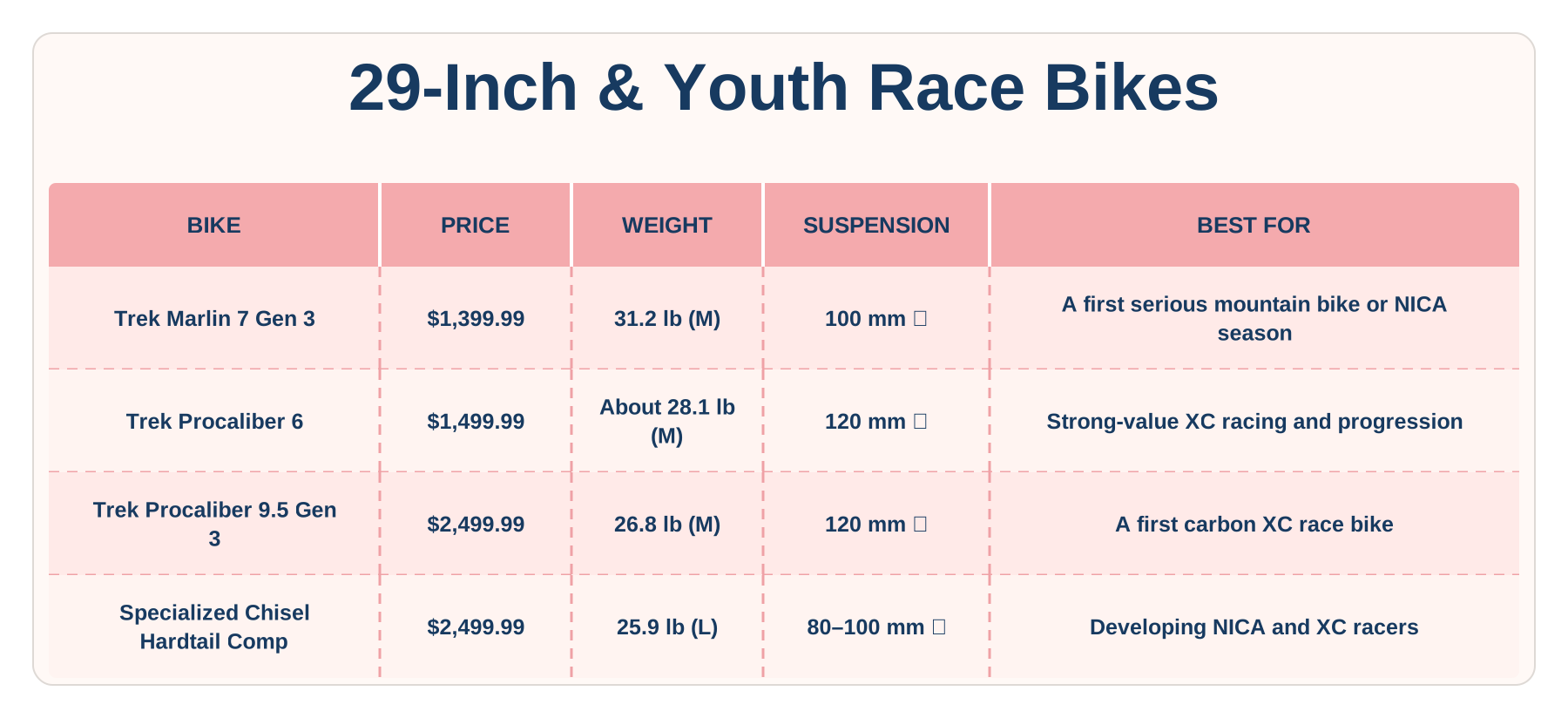
The Trek Marlin 7 Gen 3 is a practical first mountain bike for new NICA riders or teens starting to ride real trails. It keeps the price reasonable while giving new riders the essentials: stable geometry, hydraulic disc brakes, and a wide-range 1x12 drivetrain. It is not a high-performance race bike, and stronger riders may outgrow the entry-level components as speed and skills increase. For a first full NICA season, it gets kids onto capable equipment without a huge upfront investment.

Trek
Procaliber 6What We Love
- • High-quality drivetrain and suspension for the price
- • Dropper post included
- • Race-capable components without full race-bike cost
- • Strong value, especially with NICA discounts
Worth Knowing
- • Heavier than carbon-frame alternatives
- • Riders chasing top-end performance will eventually want lighter options
The Trek Procaliber 6 is for riders who are ready for more than an entry-level hardtail but do not need to jump straight to a carbon race bike. The biggest value is in the components: a 120mm RockShox Judy Silver air fork, Shimano Deore 1x12 drivetrain with an XT rear derailleur, Shimano hydraulic brakes, and a dropper post. The aluminum frame adds weight compared with higher-end carbon builds, but it keeps the price lower while still giving young racers capable, serviceable equipment for real XC riding.

What We Love
- • Lightweight carbon frame improves climbing and acceleration
- • RockShox Judy Gold fork adds control on rough terrain
- • Shimano Deore 1x12 is reliable and easy to maintain
- • Easy to adjust with tires and wheel upgrades
Worth Knowing
- • Expensive compared to aluminum options
- • Stock components are solid but not high-end
- • Hardtail limits comfort on very rough terrain
The Trek Procaliber 9.5 Gen 3 is for riders ready to move from an entry-level hardtail to a lighter, faster race bike. The carbon frame is the main upgrade, helping reduce weight and improve efficiency on climbs, accelerations, and full race efforts. It also has a 120mm RockShox Judy Gold fork, Shimano Deore 1x12 drivetrain, and modern hardtail geometry. It is still not cheap, but it brings carbon-frame performance to a more accessible price point than many other bikes.

Specialized
Chisel HardtailWhat We Love
- • Lightweight aluminum frame that feels fast and efficient
- • Modern XC geometry
- • Strong step-up bike for developing racers
Worth Knowing
- • Hardtail is less forgiving on rough or technical trails
- • No dropper post included
The Specialized Chisel is for NICA and XC riders who want a real race hardtail without paying for carbon. The aluminum frame keeps the price lower while still feeling light, stiff, and fast on climbs, accelerations, and smoother singletrack. It is more forgiving for everyday use than a carbon race bike, especially for developing riders who are still crashing, transporting bikes, and pushing limits. As with all hardtails, it is less forgiving than full suspension on rough terrain, and many riders will want to add a dropper post as they move into steeper or more technical trails.
How to Choose the Right Kids Bike
If you’re just getting started, the category can feel unnecessarily complicated. Most parents assume price or brand matters most. It doesn’t. What matters is whether the bike is built for a child’s size, strength, and coordination.
Every recommendation in this guide comes from firsthand testing, long-term use with my own kids, and input from experienced parents and riders I trust.
If you want to start with specific bikes, scroll down to the picks grouped by size. If you want the buying advice first, use the page navigation to jump to the guide below.
If you remember nothing else, remember this:
- Buy the lightest bike your budget allows. Kids feel every extra pound more than adults do.
- Do not size up too far. A bike your child can control today is worth more than one they might grow into later.
- Match the bike to how they ride now. Neighborhood cruising, pump tracks, rail trails, and real singletrack call for different bikes.
Weight Matters Most
Most parents don’t think about bike weight until it’s too late. My road bike is about 16 pounds. At 175 pounds, that’s roughly 9 percent of my body weight.
Now compare that to a typical kids’ bike. My son’s 20-inch bike weighed 23 pounds out of the box, nearly half his body weight. The adult equivalent would be riding something closer to 80 pounds.
Heavy bikes are harder to start, harder to climb, harder to control, and harder to enjoy, especially at the low speeds where kids spend most of their time.
When a child struggles on a bike, it’s easy to assume they aren’t ready or interested. Sometimes the bike is too heavy, too big, or wrong for how they want to ride.
Tip
Buy the lightest bike your budget allows. Even a one- or two-pound difference can change how a bike rides and how long a child wants to stay on it.
Choosing the Right Type of Kids Bike
The right bike depends on where and how your child rides. A bike built for pavement will feel very different from one built for dirt, grass, trails, or pump tracks, and the wrong match can make riding harder than it needs to be.
Mountain Bikes: The Best All-Around Option
If your kid rides a bit of everything — dirt, grass, trails, pump tracks, and neighborhood laps — a mountain bike is usually the most versatile choice. Wider tires add stability, grip, and cushion, especially for newer riders still learning how to handle bumps, loose surfaces, and uneven ground.

BMX Bikes: Simple and Durable
BMX bikes are built around simplicity. There are no gears to manage and fewer components to adjust or break, which makes them a low-maintenance option for everyday riding.
They work best for shorter, more playful riding: driveways, parks, pump tracks, and small features. They are not built for longer rides or varied terrain. The single-speed setup is durable, but it is slower and less efficient once distance or hills enter the picture.
For kids who want to play on a bike more than cover ground, BMX bikes makes sense.
Hybrid Bikes: Best for Pavement
If most riding happens on roads, sidewalks, paved paths, or rail trails, a hybrid bike is often the better choice.
The lighter, faster-rolling tires and more upright position make hybrids easier to pedal over longer distances on smooth surfaces. Compared with a mountain bike, they usually feel quicker and more efficient on pavement.
Once rides move onto dirt, roots, grass, or rough gravel, hybrids lose their advantage. Narrower tires provide less grip and cushion, and the bike feels less stable when the surface gets loose or uneven.
Kids Bike Sizing
Every parent has the same instinct: buy a bike a little big so it lasts longer.
I’ve done it myself. It feels practical. It is also one of the fastest ways to undermine a child’s experience on a bike.
A bike that’s too big changes how a child rides. They struggle to get comfortable, control speed, and start or stop cleanly. Instead of building confidence, every ride adds small points of friction. For many kids, that’s where riding starts to lose its appeal.
A properly sized bike removes those barriers. They can get on, get moving, and stay in control without overthinking every movement.
Tip
A good fit should let your child stand over the bike comfortably, reach the bars without fully extending their arms when seated, and get a foot down quickly when needed. If any of those are clearly off, adjust the fit before assuming your child will grow into it.
The pushback is cost. Kids outgrow bikes quickly, and it can feel wasteful to buy the right size knowing it may only last a season or two.
There are better ways to solve that than sizing up. Quality kids’ bikes hold their value well, some brands offer trade-in programs, and the used market is full of bikes that were outgrown long before they were worn out.
A bike your child can control today is worth more than one they might grow into later. Solve the cost problem with resale, trade-ins, or hand-me-downs, not with a bike that’s too big.

Key Features to Consider
Once you’ve narrowed the choice by weight, size, and riding style, a few smaller details can change how the bike feels, especially as kids start riding farther, faster, or on more varied terrain.
Gears: When They Help and When They Don’t
If your child rides longer distances or hills, gearing shapes how the bike feels.
Adults can grind up a hill in a hard gear. Kids usually can’t. When the gearing is too high, even small inclines can stop them cold.
Most smaller bikes, especially 16-inch and under, are single-speed. That is usually the right call. At that stage, kids are still learning balance, braking, starting, and stopping. Adding shifting too early adds another thing to learn how to manage.
The more important detail for bikes that size is the gear ratio. A single-speed bike can still be geared too high or low. For younger riders, lower gearing is usually better, especially anywhere that is not completely flat. I learned this the hard way. My daughter’s first pedal bike was geared too high, and mild hills stopped her dead in her tracks. When we switched to a bike with lower gearing, the change was immediate.

Once you move into 20-inch wheels and up, gears start to make practical sense. They make it easier to manage longer rides, heavier bikes, and changing terrain without wearing out too quickly.
It’s also where component quality begins to matter. Brands like Prevelo and Early Rider tend to use higher-quality drivetrains, often compatible with standard adult components, which makes adjustments and upgrades straightforward for a shop or a knowledgeable parent.
Tip
Don’t add gears just because they seem more advanced. For younger kids, simple is usually better. Gears are useful when they help with longer rides, hills, or changing terrain.
Suspension
Suspension is one of the easiest places to mistake appearance for performance.
On smaller kids’ bikes, it rarely works the way parents expect. Many suspension forks are not tuned for lighter riders, so they add weight and cost without any true benefit. For kids riding pavement, grass, or smooth dirt, that extra weight makes the bike harder to handle without adding much comfort or control.
A rigid fork is usually the better choice in the early stages. It keeps the bike lighter, cheaper, and easier to manage.
Suspension starts to make sense when the bike is large enough and the riding is rough enough. In practice, that usually means a 20-inch bike or larger, regular trail riding, and terrain with roots, rocks, drops, or repeated bumps where a fork can improve grip and control.
From there, the question is how hard your child is riding. A good suspension fork can be a meaningful upgrade for trail riding. Full suspension is a different category entirely, both in cost and purpose. Stepping up to full suspension usually adds roughly three pounds, which is a lot on a kids’ bike. That weight only starts to make sense for the few kids already riding bike parks, lift-served downhill trails, or aggressive technical terrain.
Tip
Don’t pay for suspension just because it looks more capable. A light rigid bike is usually better for new riders, smooth surfaces, and mellow dirt. Suspension becomes useful when the terrain is rough enough and the child is riding hard enough to benefit from it.
Brakes
Brakes are one of the few components where better equipment can change how confidently a child rides.
Coaster brakes, which engage when a child pedals backward, are still common on entry-level bikes. They keep the bike simple and can work fine for casual first pedal rides on sidewalks, driveways, and around the neighborhood. The limitation comes later, when kids move to bigger bikes, higher speeds, and terrain where hand brakes provide better control.
Rim brakes are still useful on lighter, lower-cost bikes that are not built for aggressive trail riding. They help keep weight and price down, and on neighborhood bikes, path bikes, and smaller pedal bikes, they can be more than enough.
Hydraulic disc brakes become more valuable as speed and terrain increase. They require less hand effort than most rim or mechanical disc brakes, work more consistently in wet or dirty conditions, and give kids better control on trails, descents, and quick stops.
Balance bikes are a separate case. Many do not need brakes at all because kids stop with their feet. A hand brake can help teach the motion of braking before kids move to pedal bikes, and a hydraulic disc brake only starts to make sense for kids riding faster on hills, pump tracks, or off-road terrain.
Tip
Match the brakes to the bike’s intended use. Don’t pay for hydraulic discs on a bike that will mostly cruise sidewalks, and don’t accept weak brakes on a bike built for speed, trails, or steeper terrain.
Buy for the Rider You Have Now
Buying a kid’s bike feels like it should be straightforward. In practice, small decisions can shape whether a child enjoys riding or walks away from it.
The variables are consistent across every category: the bike needs to fit correctly, feel light enough to handle, and match how your child actually rides.When those line up, kids ride more, gain confidence faster, and start exploring on their own terms.
When they don’t, frustration builds, the bike gets used less, and interest fades.
Buy for the rider you have now, not the one you hope they’ll grow into. Get that right, and the bike becomes something they reach for instead of something you have to convince them to use.
The Kitli Promise
We earn commissions through affiliate links. That’s how we fund our testing and keep Kitli free. But commissions never influence what we recommend.
“If we wouldn't use it with our own families, we don't recommend it to yours.”
Read Our Story →Bobby Lea
Co–Founder
Bobby Lea is a dad of two and co-founder of Kitli. Before launching Kitli, he was a senior reviews editor at Bicycling, where he spent years testing gear and helping readers decide what was worth their money. He also raced bikes professionally for more than a decade and competed in three Olympic Games. He lives with his wife and kids on a farm in rural Pennsylvania, where his children are very good at finding the limits of whatever gear they use.
View Profile →