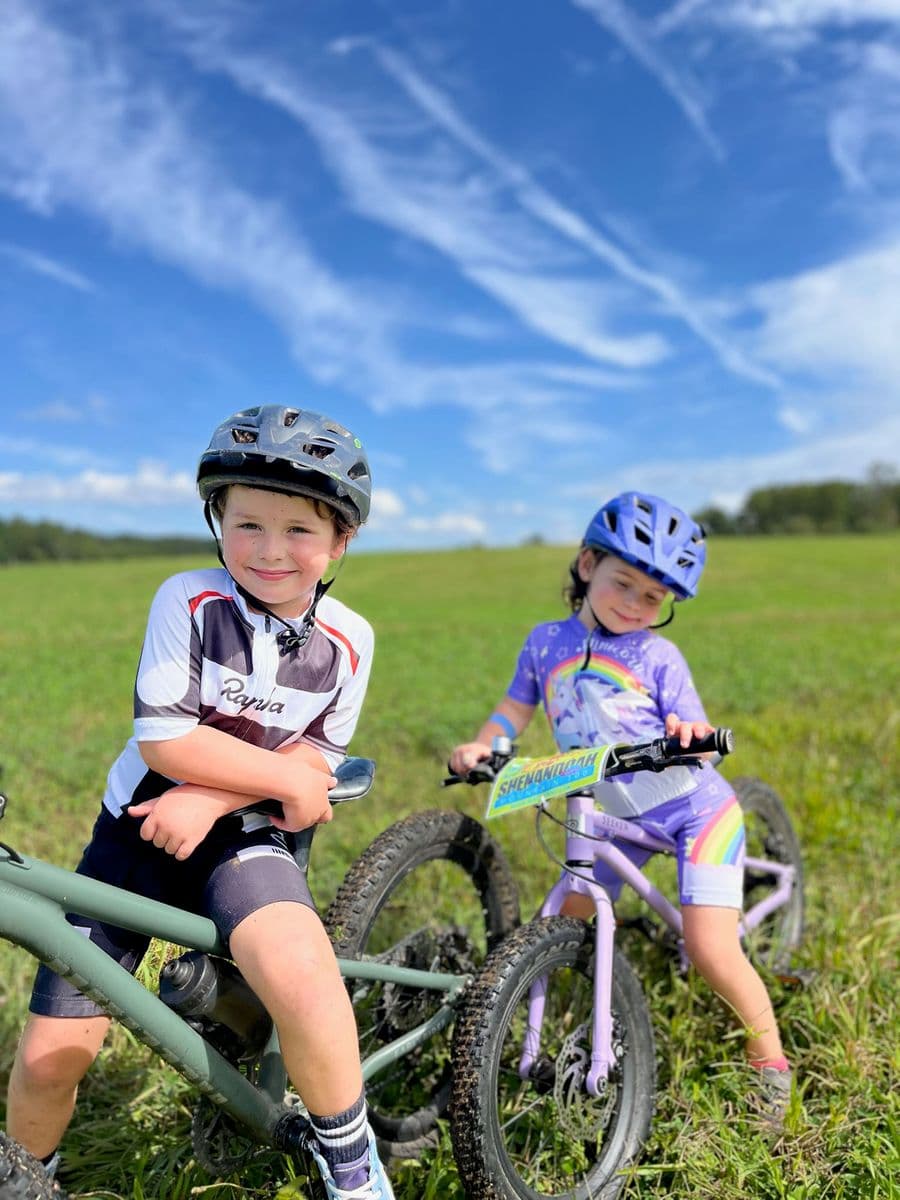
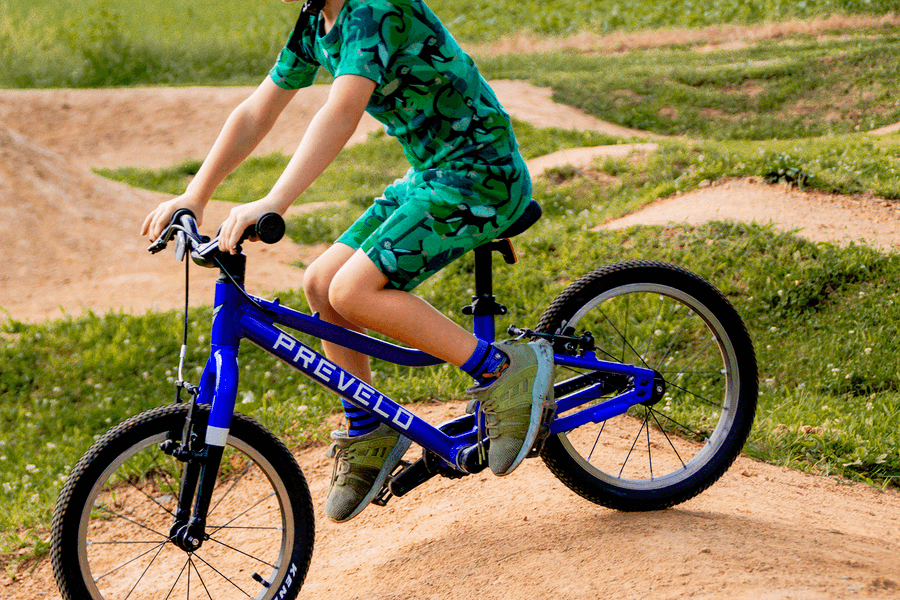
I tested these 24-inch bikes with real kids, including my own family and riders in the Kitli community. The bikes that stood out were light, well-built, and matched to how kids actually ride, from everyday neighborhood miles to singletrack and pump tracks.
Our Top 24-Inch Kids Bikes for 2026
- Best Overall 24-Inch Bike: Early Rider Charger 24
- Best Trail Bike: Commencal Meta HT 24
- Best Neighborhood Bike: Prevelo Alpha Four
- Best Value 24-Inch Mountain Bike: Specialized Riprock 24
- Best Gravity Bike: Early Rider Hellion X24
Keep scrolling for our deep-dive reviews of each model, plus our expert buying advice on sizing, weight, and suspension.
What Age Is a 24-Inch Bike For?
A 24-inch bike is often the last true kids’ bike before a rider moves into small adult sizes. Most fit kids around ages 7 to 11, but age is only a starting point. Height, inseam, riding ability, and where they ride matter more.
As a rough guide, many 24-inch bikes fit riders with inseams around 23 to 28 inches, though standover height and seat height vary by model. A child should be able to stand over the bike comfortably, reach the handlebar without stretching, and get a foot down when stopping. Newer riders should be able to sit on the saddle with both feet flat on the ground and a slight bend in their knees.
At this stage, bike weight, brakes, gearing, tire choice, and suspension quality can make a noticeable difference in confidence and control. For neighborhood rides and bike paths, a lightweight hybrid may be the best fit. For singletrack, pump tracks, and rougher terrain, a mountain bike is usually the better choice.
If your child is between sizes, do not rush them onto a bigger bike just because the age chart says they are ready. A bike that is slightly too small is usually easier to manage than one that is too big.
Not sure your child is ready for 24-inch wheels? Start with our full kids bike guide, where we break down our top tested picks by age, size, and riding style.
The Best 24-Inch Kids Bikes

Early Rider
Charger 24What We Love
- • Real trail geometry that handles speed and rough terrain
- • 100 mm air fork adds meaningful control
- • Higher-quality, more durable components
- • Capable on technical singletrack
Worth Knowing
- • More expensive than most 24-inch bikes
- • About 3 lb. heavier than premium rigid kids bikes
- • Overbuilt for beginners or casual riders
The Early Rider Charger X24 is for kids already riding real singletrack at speed and starting to outgrow simpler 24-inch bikes. It has a 100mm air fork, Shimano Deore 1x10 drivetrain, and trail-focused geometry that give it more control when terrain gets rough. It is about three pounds heavier than rigid bikes like the Specialized Riprock 24, but that weight comes from real suspension and higher-quality components. It is expensive and unnecessary for beginners, but highly capable for advanced young trail riders.

Commencal
Meta HT 24What We Love
- • 120mm Manitou Junit fork
- • Maxxis DHF/DHR II tires add real grip
- • Hydraulic disc brakes with 180mm front rotor
- • Dropper-post compatible frame
Worth Knowing
- • Heavier than lighter XC-focused hardtails
- • Dropper post is not included
- • Best for kids who prioritize descending and technical trail riding
- • Premium price for a 24-inch hardtail
The Commencal Meta HT 24 is for kids who are riding rougher singletrack and want a 24-inch hardtail with more descending confidence than a lighter XC bike. The 120mm Manitou Junit air fork is built for smaller riders, with low breakaway force so it starts moving under less rider weight instead of feeling stuck at the top of its travel. Maxxis DHF/DHR II tires, hydraulic disc brakes, and a larger 180mm front rotor give the bike real control on steeper, rougher terrain. It is heavier than some 24-inch hardtails, but that weight buys proper suspension, serious tires, and trail-focused durability. The frame is also dropper-post compatible, which is a worthy upgrade for a bike as capable as this.

Prevelo
Alpha FourWhat We Love
- • Very light for a 24-inch bike
- • Hydraulic disc brakes
- • Narrow Q-factor cranks
Worth Knowing
- • No suspension, and not built for aggressive trail riding
- • Best for pavement, paths, gravel, and smooth dirt
- • Trail-focused riders may be better served by the Prevelo Zulu Four
The Prevelo Alpha Four is for kids who mostly ride pavement, bike paths, gravel, and smooth dirt but are ready for a higher-quality 24-inch bike. It is light for its size, with an 8-speed Microshift Acolyte drivetrain, clutched derailleur, and hydraulic disc brakes. The low gearing helps on hills, the clutch keeps the chain controlled over rougher surfaces, and the two-piece cockpit gives you room to adjust fit as your child grows.

Specialized
Riprock 24What We Love
- • Versatile 2.1-inch Kicker tires are good for trails, paths, and pavement
- • Microshift Advent 1x9 drivetrain
- • Capable trail bike without suspension-bike pricing
- • Lower weight than many cheaper suspension-fork alternatives
Worth Knowing
- • No suspension fork
- • Wider tires will feel slower on pavement than hybrid tires
- • Best for kids riding real trails, not mostly neighborhood loops
- • Lighter suspension bikes exist, but they cost significantly more
The Specialized Riprock 24 is for families who want a real 24-inch trail bike without paying the premium that comes with a suspension fork. It has the right parts for dirt: 2.35-inch Ground Control tires, hydraulic disc brakes, a 1x9 drivetrain, and modern mountain bike geometry. The rigid fork keeps price and weight down, while the wide tires add grip and cushion on roots, rocks, and loose corners. A tubeless tire conversion can improve comfort and reduce pinch flats. It is a strong value for kids riding real trails.

Woom
Explore 5What We Love
- • Light for a 24-inch all-terrain bike
- • 1x8-speed drivetrain
- • Hydraulic disc brakes
- • 2-inch tires work well on pavement, cinder paths, and packed dirt
- • Woom trade-in program helps offset future size-ups
Worth Knowing
- • Expensive for a general-purpose 24-inch bike
- • Not built for regular technical trail riding
- • Sticker packs are sold separately
- • Fenders and lights are sold separately
The Woom Explore 5 is a premium 24-inch all-terrain bike for kids who ride pavement, rail trails, neighborhood loops, and smooth dirt. It is lighter and faster than a true mountain bike, but more capable than a pavement-only hybrid. At just under 21 pounds, it is light for the size, with a 1x8 drivetrain, hydraulic disc brakes, and 2-inch Schwalbe Billy Bonkers tires. The adjustable stem helps fine-tune fit as kids grow. It is expensive, but Woom’s trade-in program and resale value help offset the price.

Prevelo
Zulu FourWhat We Love
- • Light for a 24-inch hardtail with an air fork
- • 100mm air spring fork with rebound adjustment
- • Very low climbing gear for steep trails
- • Hydraulic disc brakes with short-reach levers
- • Tubeless-ready wheels and tires
Worth Knowing
- • Premium price for a 24-inch bike
- • Best for kids already riding real trails
- • 2.2-inch tires favor cross-country speed over maximum downhill grip
The Prevelo Zulu Four is for kids who are ready for a serious 24-inch mountain bike and spend real time on singletrack. It combines low weight, a tunable 100mm RST First AIR fork, hydraulic disc brakes, and a wide-range Microshift Advent X drivetrain with a very low climbing gear for steep dirt and long climbs. The slim 19mm grips, short-reach brake levers, 130mm cranks, and narrow Q-factor help the bike fit smaller riders properly. Tubeless-ready HEIR wheels and Kenda Booster Pro 2.2 tires make it quick-rolling, capable, and well-suited to cross-country and trail riding.

Early Rider
Hellion X24What We Love
- • Full-suspension 24-inch platform for gravity-focused riders
- • 120mm RST F1rst air fork
- • Adjustable DNM rear shock with 100–125mm travel
- • Shimano Deore 1x11 drivetrain
- • Shimano hydraulic disc brakes
- • Dropper-ready frame
- • Tubeless-ready wheels and tires
Worth Knowing
- • Very expensive for a 24-inch kids’ bike
- • Full suspension adds weight and maintenance
- • Best for kids who are already riding hard enough to use it
The Early Rider Hellion X24 is for kids who are already riding jump lines and bike parks. It is a true 24-inch full-suspension bike, with a 120mm RST F1rst air fork and adjustable DNM rear shock that can be tuned for lighter riders while still supporting drops and repeated hits. Shimano Deore 1x11 gearing, Shimano hydraulic disc brakes, tubeless-ready wheels, and a dropper-ready frame give it the build quality serious gravity riders need. At 26 pounds it is impressively light for a full-suspension kids’ bike and one of the most capable 24-inch mountain bikes available.
Explore our full collection of expert-vetted gear, helmets, sizing advice, and bikes in All Kids Bikes & Gear.
Hybrid or Mountain Bike?
Choose a hybrid if most rides happen on pavement and bike paths. A good hybrid will usually be lighter, faster-rolling, and less expensive than a comparable mountain bike.
Choose a mountain bike if your child regularly rides rough trails, pump tracks, or techincal terrain. That is where wider tires, stronger brakes, off-road geometry, and suspension provide real value.
Trail features add weight and cost. If your child will not use them, keep the bike lighter and simpler. If they are pushing into rougher terrain, choose the bike that gives them the traction, braking, and control to stay confident.
Watch the Weight Creep
At 24 inches, bikes get bigger and weight can climb quickly. Suspension forks, bigger wheels and tires, disc brakes, and lower-cost components can all add pounds.
That does not mean the lightest bike is always the right bike. A 19-pound hybrid and a 25-pound mountain bike are built for different jobs. The lighter bike will be faster and easier to ride on streets and bike paths. The heavier trail bike may earn that weight with wider tires, stronger brakes, and suspension that improve off-road performance.
The problem comes when extra weight does not improve the ride. If the added weight does not make the bike more capable, your child is just hauling around a heavy bike for no reason.
For pavement and smooth terrain, prioritize low weight. For off-road riding, accept extra weight only when it gives your child real control on the terrain they ride.
Rigid Fork or Suspension Fork?
A suspension fork is not automatically better.
On lower-cost kids’ bikes, coil-spring suspension forks often add weight without adding much usable performance. Many young riders are not heavy enough to make a basic coil fork move well, so they end up carrying extra weight without getting much control in return.
A rigid fork with wider tires can be the better choice for pavement, bike paths, gravel, and smooth dirt. If the tires can be set up tubeless and run at lower pressure, they can add grip and cushion without the weight or maintenance of a suspension fork.
The same logic applies to some kids’ mountain bikes. A lighter rigid bike like the Specialized Riprock 24 can be a better choice than a similarly priced bike with a heavy coil-spring fork.
A quality air fork starts to make sense when kids are riding technical trails. Air pressure can be adjusted for lighter riders, which makes the fork more useful on rocks, roots, and rough descents.
Why These Bikes Use Hydraulic Disc Brakes
Many 24-inch bikes still use rim brakes, and that can be fine on lighter hybrid bikes built for pavement and casual riding. Rim brakes help keep weight and cost down, but they need occasional adjustment and do not offer the same consistency in wet or dirty conditions.
You may also see cable-actuated disc brakes on some lower-priced 24-inch bikes. They use a disc rotor at the wheel, so they can offer better wet-weather performance than rim brakes, but the brake is still pulled by a cable. That means they need adjustment as the cable stretches and the pads wear, and, like rim brakes, they usually require more effort to pull the brake lever.
Every bike in this guide uses hydraulic disc brakes. They provide stronger, more consistent braking with an easier lever pull, which helps kids control speed more reliably. They add cost and some weight, but on bikes at this level, they are the best choice.
Why 1x Drivetrains Are Better
A 1x drivetrain uses one chainring up front and a cassette of gears in the back. That keeps shifting simple: one shifter, no front derailleur, and no need for kids to think about which chainring they should be using. Shifting in one direction gives them an easier gear for climbing. The other gives them a harder gear for going faster.
Bikes with multiple front chainrings may look better on paper because they promise more total gears. In reality, they add complexity. The bikes in this guide all use 1x drivetrains because they give kids the range they need without extra decisions.
That is not just a kids’ bike feature. Many adult mountain, gravel, and even some road bikes now use 1x drivetrains for the same reason: enough usable gearing, fewer parts, and simpler shifting.
How We Tested
Every bike in this guide has been tested through real use by our kids, families in the Kitli community, or both.
We looked at the details that change how a 24-inch bike rides: weight, fit, gearing, brakes, tires, suspension where applicable, build quality, and ease of service.
These bikes were ridden by real kids in the places 24-inch bikes actually get used: neighborhoods, bike paths, gravel, smooth dirt, singletrack, pump tracks, climbs, descents, and rough backyard lines.
We included the bikes that helped kids ride with confidence, stay in control, and keep coming back. If a bike made riding harder than it needed to be, it did not make the list.
The Kitli Promise
We earn commissions through affiliate links. That’s how we fund our testing and keep Kitli free. But commissions never influence what we recommend.
“If we wouldn't use it with our own families, we don't recommend it to yours.”
Read Our Story →Bobby Lea
Co–Founder
Bobby Lea is a dad of two and co-founder of Kitli. Before launching Kitli, he was a senior reviews editor at Bicycling, where he spent years testing gear and helping readers decide what was worth their money. He also raced bikes professionally for more than a decade and competed in three Olympic Games. He lives with his wife and kids on a farm in rural Pennsylvania, where his children are very good at finding the limits of whatever gear they use.
View Profile →