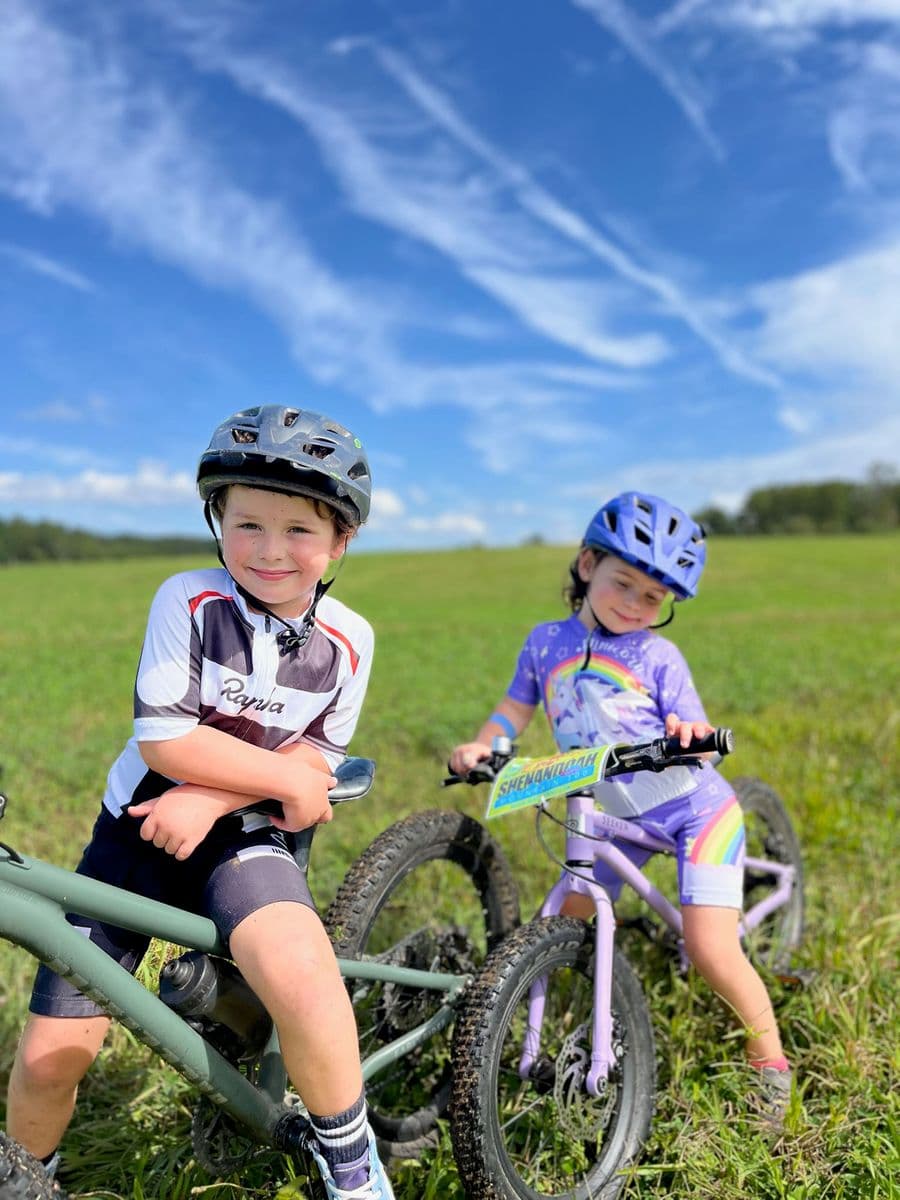
I did not want to track my kid. Then he called me from a creek deep in the woods, and I started to rethink what freedom can look like.
“Daddy?” The little voice crackled through the speaker. “We’re by the creek. There is rushing water. Everyone is okay.”
That was the moment I changed my mind about putting a tracking device on my kids.
I had been vehemently opposed to it. I did not want my children tethered to an adult through a screen, a map, or a constant digital safety net. I wanted him to have the kind of freedom I had as a kid: wandering into the woods, finding places that felt undiscovered, getting a little lost, and figuring out how to get home.
Then four kids wandered off the trail, found something cool, followed it deeper into the woods, and called me from the creek.
I Wanted My Kids to Roam
I grew up as a free-range kid on a farm in rural Maryland, where exploring deep into the woods without adult supervision was a regular part of childhood. My friends and I built forts, found abandoned duck blinds, sailed metal rowboats to unknown shores, and convinced ourselves we were the first humans to discover places that were probably a few hundred yards from someone’s house.
Then we went home for dinner, and our parents were none the wiser.
I wanted that for my kids. I still do. I want them to know what it feels like to leave the established trail and find their own secret places. I want them to feel capable, independent, and a little wild.
I also want them to know what it feels like to not know exactly where they are, and to find their way back.

I want them to feel confident enough to explore and have adventures.
But I Remember the Close Calls, Too
The problem is that I also remember the parts that could have gone badly.
There was the time I tried to jump from a dock onto my grandparents’ boat, missed, and ended up in the water, clinging to a line while I scrambled back onto a pontoon. I lost my shoes that day.
There was the shortcut through the woods that turned into a knee-deep muddy marsh. I lost my new boots that day.
And there was the summer my brother and I decided to row our dinghies out of the harbor and around an island off the coast of Maine so we could surprise our parents by arriving back at the house from the other side. By pure luck, we hit slack tide and made it. If the tide had been running out to sea, we would have had no chance of rowing safely back into the bay.
I was too young to understand the danger in those moments. But I was old enough to remember the thrill.
That is the tension I keep running into as a parent. I do not want to hover. I do not want to micromanage every risk my kids cannot yet see. But I also know the difference between a harmless adventure and a dangerous one is not always obvious to a kid in the middle of it.
The Watch I Did Not Want
That is where the Garmin Bounce 2 complicated things for me.
It is a kid-specific smartwatch with LTE connectivity, location sharing, activity tracking, and limited calling messaging with approved contacts — basically everything I thought I did not want.

Garmin
Bounce 2 – Kids'What We Love
- • Lets kids call and message approved contacts
- • Real-time location tracking through the Garmin Jr. app
- • School Mode and sleep settings reduce distractions
- • Activity tracking makes movement more fun for kids
- • More kid-friendly than using a hidden Airtag
Worth Knowing
- • Requires a paid LTE subscription for calling, messaging, and location features
- • Not a replacement for supervision
- • Expensive compared with basic kids’ activity trackers
- • Battery life depends on use and connectivity
- • Best for families who want communication and location tools without giving a child a phone
But in real life, it feels less like a screen competing for his attention and more like a simple way for him to check in, ask for help, or tell us where he is.
Still, I was skeptical. Tracking a kid felt like crossing a line I did not want to cross.
Then my son called from the creek.
He and three other kids had wandered deeper into the woods than planned because they found something interesting and kept going. They were not panicked. They were not asking to be rescued. They were doing exactly what I wanted kids to do: exploring, problem-solving, and feeling independent.
But they could also check in.

A simple check-in function pings you with a notification. They can also call or send a pre-set text message.
It Did Not Take Away the Adventure
That was what changed my mind.
The Garmin Bounce 2 did not remove the adventure. They were still in the woods, away from adults, without maps, and without fully developed prefrontal cortexes. They had still made the decision to leave the trail. They had still found the creek on their own.
The watch did not turn that experience into supervised play. It gave them a way to communicate when the situation changed.
I do not want to track my son for the sake of tracking him. I do not want a device that replaces the slow process of earning trust, teaching judgment, and giving him more independence. I want something narrower: a way for him to reach me when he needs to, and a way for me to reach him without giving him a screen that solves every uncertainty for him.
The Bounce 2 gave us that middle ground.
A Tool for Freedom
I am still not entirely comfortable with location tracking, and I do not think I ever want to be fully comfortable with it.
But I am more comfortable giving my son more freedom when he has a way to check in. The watch has not made him less adventurous. If anything, it has made it easier for us to say yes when he wants to explore farther, because the safety net is there if he needs it.
The Garmin Bounce 2 did not make me want to monitor my kid. It made me more comfortable letting him roam.
The Kitli Promise
We earn commissions through affiliate links. That’s how we fund our testing and keep Kitli free. But commissions never influence what we recommend.
“If we wouldn't use it with our own families, we don't recommend it to yours.”
Read Our Story →Bobby Lea
Co–Founder
Bobby Lea is a dad of two and co-founder of Kitli. Before launching Kitli, he was a senior reviews editor at Bicycling, where he spent years testing gear and helping readers decide what was worth their money. He also raced bikes professionally for more than a decade and competed in three Olympic Games. He lives with his wife and kids on a farm in rural Pennsylvania, where his children are very good at finding the limits of whatever gear they use.
View Profile →
~2-900x983.jpg&w=3840&q=75)